
How to Build an Emergency Fund (Even If You're Starting From Zero)
Key Takeaways
Start with $500–$1,000 first, not the full 3–6-month target.
Keep it separate from checking, in a liquid savings account.
Automate small transfers so saving happens without willpower.
Reserve it for true emergencies, then consider CD laddering.
Life doesn't send a warning before the car breaks down or your work hours get cut. That's exactly why an emergency fund matters, and why it's worth building even if you can only set aside a few dollars a week right now. We're here to help you start learning how to build an emergency fund without overhauling your entire budget overnight.
More than 5.2 billion people are expected to use digital wallets this year, according to SQ Magazine, which represents more than 60% of the world’s population. The report said digital wallets account for around 83% of global digital payment volume, and 35% of online transactions are processed using mobile wallets in major global markets.
What Actually Counts as an "Emergency"?
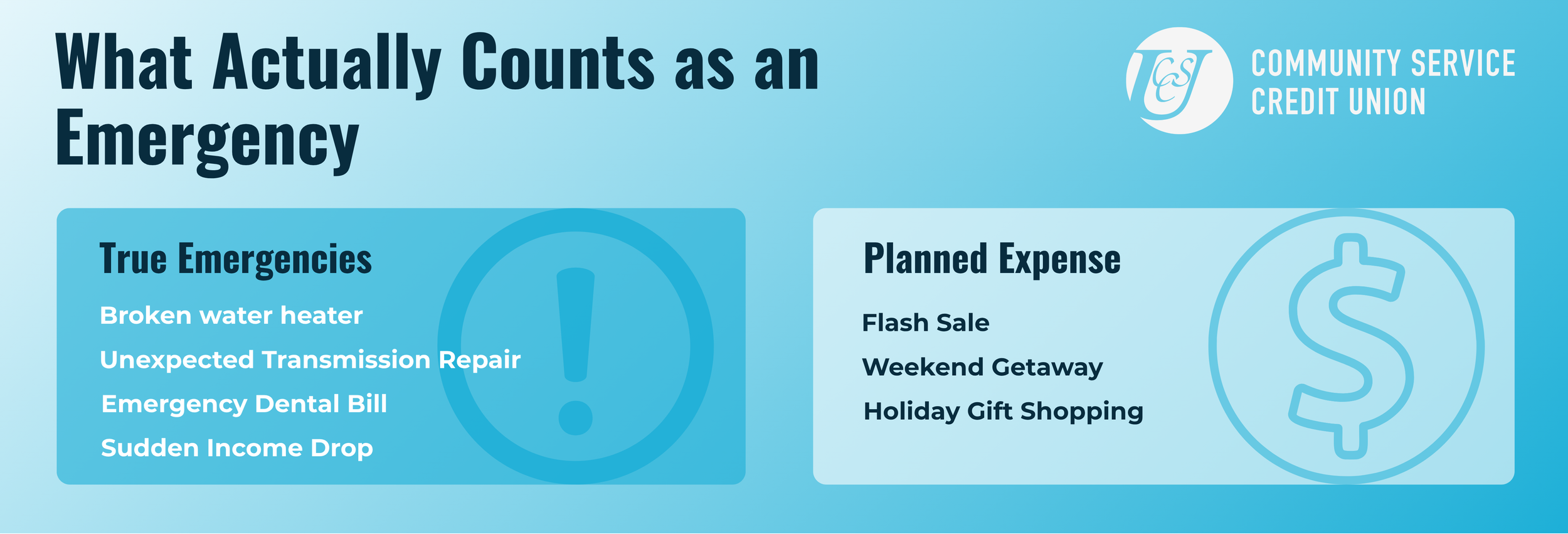
Before you start saving, it helps to draw a clear line around what this money is for. Real emergencies include things like:
Losing a job or a sudden drop in income
Medical or dental bills that need to be paid straight away
Car repairs that get you back to work
Urgent home repairs like a broken water heater or a leaking roof
What it's not for: holiday shopping, vacations, or that sale you don't want to miss. Those are planned expenses, and they deserve their own savings goal.
This distinction matters more than it might seem. The number one reason emergency funds stop growing is that they quietly become general spending accounts. Once a fund isn't reserved for true emergencies, it's easy to justify dipping in for anything, and the balance never gets the chance to increase.
That’s why we advise our members to never carry a balance on any P2P app. Instead, we recommend using the Zelle P2P system that’s built directly into our CSCU mobile banking app. When it comes to Zelle vs Venmo safety, there’s no comparison. With Zelle, your money stays safely inside your NCUA-insured and protected CSCU account until you send funds to a friend or family member.
How Much Should You Actually Save?
If you've ever looked into how much an emergency fund should be, you've probably run into the advice to save three to six months of expenses. For someone starting from zero, that number can feel so big it's discouraging and it puts you off starting altogether.
Three to six months of expenses is the long-term goal, not the starting line. A more realistic first target is $500 to $1,000. That's a common starting point for members building their first cushion, and it's enough to cover a lot of the small emergencies like car repairs or a vet bill that would otherwise need to go on a credit card.
Once you've hit that first milestone, you can calculate your bigger target by adding up your essential monthly expenses (housing, utilities, groceries, insurance, minimum debt payments) and multiplying by three to six, depending on how much of a cushion feels right for your situation.
For example, if your essential monthly expenses add up to $2,800, a three-month cushion would be $8,400, and a six-month cushion would be $16,800. Where you land in that range often comes down to job stability, as someone with steady, predictable income might feel comfortable at three months, while someone with variable income like commission-based work, seasonal jobs, or self-employment may want closer to six months.
Where Should You Actually Keep It?
The best place to keep an emergency fund is somewhere separate from your everyday checking account. Out of sight really does mean it's less tempting to dip into that pot. If the money isn't sitting next to your debit card balance, you're less likely to spend it.
Two CSCU accounts fit at different stages:
| Savings Account | Money Market Account | |
|---|---|---|
| Best For | Starting your fund from zero | Growing balances once your fund is established |
| Liquidity | Fully liquid, easy transfers | Fully liquid, easy transfers |
| Typical Use Case | First $500–$1,000 milestone | Larger balances working toward a 3–6 month target |
As your balance grows, a Money Market account can be worth a look for members carrying a larger amount, since it's built for higher balances while staying just as accessible. Whichever account you choose, the key is keeping this money liquid. A certificate of deposit or an investment account might offer better long-term growth, but emergencies don't wait for a maturity date or a good market day. It's crucial that this fund be reachable the moment you need it.
How to Make Saving Automatic
Willpower is unreliable. Automation isn't. A few ways to take the decision-making out of saving include:
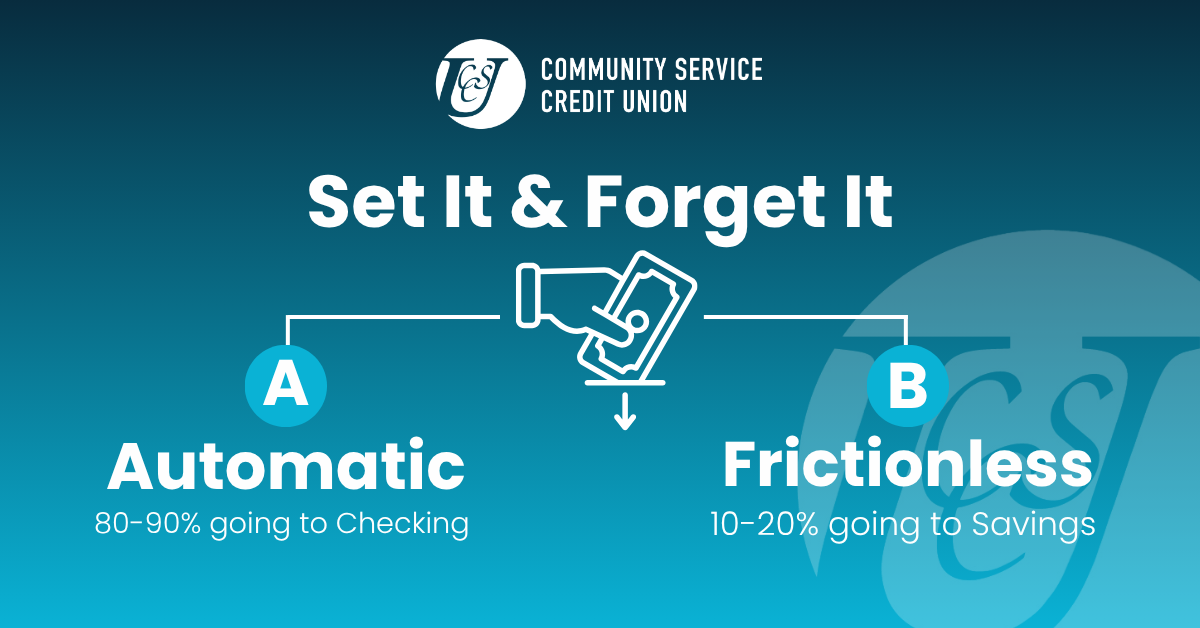
Set up a recurring transfer from checking to savings. Even $10 to $25 per paycheck adds up faster than it feels like it should.
Split your payroll direct deposit (if your employer offers it) so a portion routes straight into savings before it ever hits your checking account.
Round up debit card purchases to the next dollar and send the difference to savings, if your account offers it. It's small, but it adds up without you noticing.
Treat savings like a bill. Pay yourself first, the same way you pay rent or a car payment. It's non-negotiable, same time every pay cycle.
The amount matters less than the consistency. A $10 transfer that happens every payday will outperform a $100 transfer you keep meaning to make but never quite get to. Start with whatever number won't tempt you to cancel the transfer after the first month, then revisit it every few months and bump it up as your budget allows.
Fast-Tracking the Fund With Windfalls
Tax refunds, work bonuses, and side income are an extra income source and a shortcut to bigger savings accounts that most people overlook. You don't have to save all of it but putting a significant amount toward your emergency fund can turn a slow build into a fast one.
Before you spend a windfall, ask yourself:
Is my emergency savings fully funded yet?
Would I regret not having this if something came up next month?
What's the smallest amount I'd be comfortable putting toward savings right now?
Even directing half of an unexpected check toward the fund can take months off the savings timeline.
A common approach is the 50/50 split, with half toward the emergency fund, half toward whatever feels good to spend or toward another goal. It's a middle ground that keeps the fund moving forward without making every extra dollar feel like a sacrifice. If the amount is small, like a $50 rebate, a $20 cash-back reward, it's often easiest to send the whole thing to savings rather than overthinking the split, since the transfer takes about as long as the decision would.
What Happens After You Hit Your Goal?
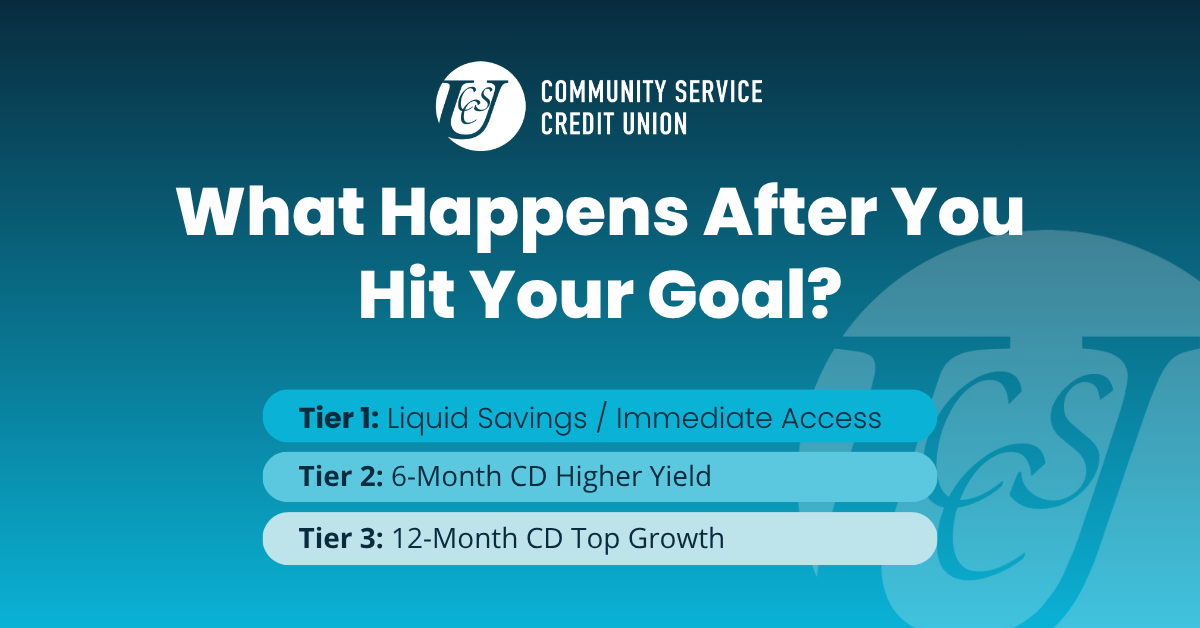
Once your emergency fund is fully funded and stable, you don't need to keep piling cash into it indefinitely. This is often when members start exploring CD laddering, where they spread savings across certificates of deposits with staggered maturity dates to capture better rates while keeping some funds accessible on a rolling basis. It's a natural next step once your safety net feels more solid.
Avoid These Common Emergency Fund Mistakes
Investing it. Markets fluctuate and an emergency fund needs to be there in full the moment you need it, not down 10% because of a bad week.
Treating it as a slush fund. If it's easy to raid for non-emergencies, it'll never grow the way it's supposed to.
Waiting for "enough" leftover money. There's rarely a month that feels like you have extra money sitting around. Starting small and automating the process solves this, as you save before you have the chance to talk yourself out of it.
Forgetting to revisit the goal. Life changes. A new job, a move, a new dependent can all make you think differently about your finances, and your targets should change with that. Check in on your number once or twice a year rather than setting it once and forgetting about it.
Building an emergency fund isn't about perfection, it's about starting as soon as possible. A CSCU savings account makes it easy to set aside what you can and keep it separate from everyday spending, so it's there when you need it most. Open your CSCU savings account today.